This year InterfaithFamily/Atlanta hosted our SECOND annual Promukkah: Prom-themed Hannukah party in our Ponce City Market office! This was the social event of the season! The evening was a blast with hip dance music spun by DJ Awesome (Gabe) of the Atlanta Jewish Music Festival, a potato latke tasting station, community candle lighting, a corsage/boutonniere making station, a very, very popular photo booth (with take home photo magnets), vintage prom-themed movies and a fabulous performance by members of the Roxie Roz gang.
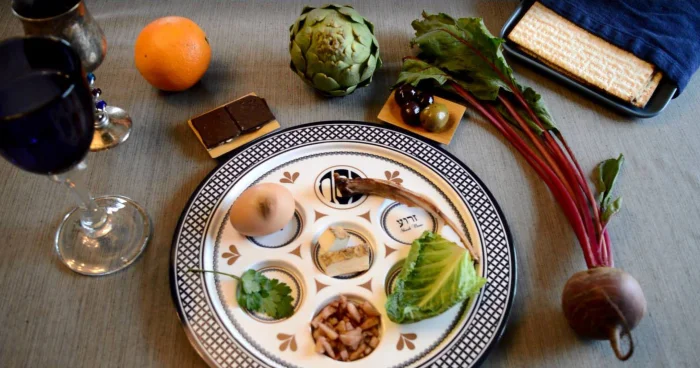
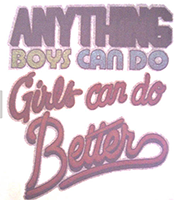
As a kid, my mother taught us to put an orange on the seder plate as an act of feminism. Around that same time, she gave me a hot pink T-shirt with rainbow sparkle letters that read, “Anything boys can do, girls can do better.” It was the ’80s and my passions for girl power, rainbows and Jewish rituals were ignited.
My mom, and many other feminists, passed on the famous origin story of the orange, that Dr. Susannah Heschel was lecturing in Miami, and, while she was speaking of feminism, an Orthodox man supposedly shouted that “a woman belongs on the bimah [pulpit] as much as an orange belongs on the seder plate.” And so, as feminists, we all added the orange as an act of resistance; a symbol of women’s rights.
But, alas, that story that I had heard and retold for decades was a myth.
(IFF’s Rabbi Robyn Frisch discusses the myth here). And while I was studying at the Reconstructionist Rabbinical College, I was quite surprised as the story was debunked by my rabbi and I learned what REALLY happened.
It was the 1980s, and Heschel was speaking at the Hillel Jewish student group at Oberlin College. While there, she came across a Haggadah written by a student that included a story of a young girl who asks her rabbi if there is room in Judaism for a lesbian. The rabbi in the story replies in anger, “There’s as much room for a lesbian in Judaism as there is for a crust of bread on the seder plate!”—implying that lesbians are impure and are a violation of Judaism.
The next year, Heschel put an orange on her seder plate and shared that she chose the orange “because it suggests the fruitfulness for all Jews when lesbians and gay men are contributing and active members of Jewish life.”
The seeds of the orange, like other items on the seder plate, symbolize rebirth and renewal. And some folks have taken on the tradition of spitting the seeds to remind us to spit out the hatred experienced by all marginalized members of our communities.
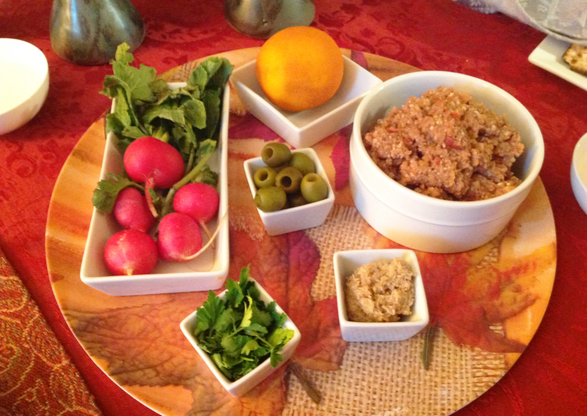
Since the addition of the orange, other symbols have been added to the traditional seder plate (watch our fun video guide for what to put on a seder plate). Some vegetarians and vegans have added a “paschal yam,” in place of the shank bone, which traditionally represents the paschal lamb. Others have included olives for peace in the Middle East. And some have placed potato peels on their plates to commemorate Jews who starved during the Holocaust.
Most recently I learned that members of Rabbis For Human Rights, who work to support the under-paid and over-worked tomato pickers in Florida, have included a tomato as a symbol of contemporary slavery.
“We who believe in FREEDOM, cannot rest until it comes.” This year, as I prepare to lead the Passover seder for my family and friends, I am emboldened to add these various symbols to our plate as reminders of who is not free. What segments of my community are still enslaved? What human rights issues must be addressed?
I am empowered to take action and commit to do the social justice work to bring equality and dignity to everyone. In the words of Rev. Dr. Martin Luther King Jr., “No one is free until we are all free.”
This year InterfaithFamily/Atlanta hosted our first annual Promukkah: Prom-themed Hannukah party in our Ponce City Market office! The evening was a blast with rockin’ dance music spun by Russell Gotchalk of the Atlanta Jewish Music Festival, delicious nosh, a corsage/boutonniere making station and a very popular photobooth.
Highlights include dancing the hora as we celebrated the recent marriage of Baca Holohan and Kai Murga, some incredibly creative outfits with lights, wigs and glowing shoes, as well as enormous jelly filled doughnuts.
My face lit up as we entered the room full of glittery drag queens prancing around the stage, singing cheesy, campy songs. Sally Struthers was relaxing in the audience after her performance at the local theater (don’t worry, we got a photo with her); dozens of queers were laughing and holding hands and flirting and drinking. It was our first time at a gay bar since the shooting in Orlando and we felt at home. My partner and I have been shaken up after recent events and were thrilled to be surrounded by “family.” My heart was soaring as we arrived on the dance floor full of gay, lesbian, bisexual, transgender and gender non-conforming folks. We felt free in our bodies. We felt safe as a queer couple. I looked around the room and saw beautiful loving souls celebrating life, celebrating love.
Rabbi Malka (left) at a Black Lives Matter rally in Atlanta
So, it surprised me when tears suddenly came rolling down my face. In that moment I truly, deeply knew what it meant to say, “We Are Orlando.” This tragedy could have happened anywhere at any time. Anyone could have been the victims. I hugged my partner close and sobbed on her shoulder. “This could have been us,” I thought.
As we left the nightclub that evening, I grabbed my sweetie’s hand tight.
That night I felt heartbreak and pain, but it felt good to be with my community. And while I didn’t feel safe, exactly, I felt at home with my people. Happy.
Like everyone I know, I’d been shattered by the shootings at Pulse nightclub in Orlando. Like everyone in my community, I voiced my outrage, marched, cried. Being surrounded by my queer community and loving allies filled me with hope and connection. Connection to everyone around me. Connection to the Source of Healing.
Only days later, the world was rocked by violence, once again. Only this time it wasn’t my people. This time, black men were killed in the streets. This time felt different. While I grieved with my Black friends and community, this wasn’t my community. This was not my family. I cried tears for those who suffered from trauma, who were scared, who were victims of individual and institutionalized White Supremacy.
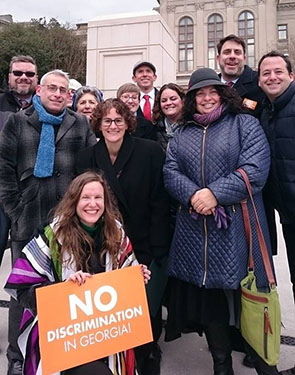
Rabbi Malka (bottom left) with other local rabbis at a protest this winter at the capital against a homophobic “religious freedom” bill
My heart sank when I learned of the retaliation attacks against police officers. My head has been spinning. The world I live in has been feeling shattered, broken and in need of mending.
It’s been a painful month.
And it’s easy to feel powerless. Scared. Angry. It’s easy to point fingers and blame and stomp and run away.
Part of me wants to run and hide and ignore the world around me and wrap myself up in the safety of my White Privilege. Wouldn’t that be easy? When I drive down the street, I don’t have to worry about being pulled over. When I peruse through the grocery store, no one assumes that I am shoplifting as I carefully place produce into my canvas shopping bags. I don’t worry for my brother’s safety when he is out in the world. I’m not fearful for my nephew’s life. It would be so easy, so simple to just check out and ignore the horrific news stories and be silent.
And part of me wants to hide in my femme, cis-gendered privilege. I can easily pass as a straight woman, avoid gay bars, use the women’s bathroom without being questioned or harassed and feel “safe.”
But I can’t hide behind my many layers of privilege. I can’t just run away. The tug is too strong. As a Jew, as a queer female identified cis-woman, as a feminist, as a white person and as a rabbi, I know that it is my obligation, my duty and my responsibility to work toward radical inclusion and social justice. It is my duty to work toward tikkun olam, healing the world.
Today, I choose to be loud. To be a part of the solution. To take a stand.
And this is complicated. What does it mean to be an advocate for the queer community, a group of people of whom I am a part? My people. My precious loved ones.
And what does it mean to be an advocate for the Black community, a group of people of whom I am not a part? My friends. My allies. My precious loved ones.
How can I use my power and privilege to create change in the world? Not as a savior, not as a hero, but as an ally. As a fellow human being.
Today, I choose to take action. Today, I choose to:
* Educate myself and my community about racism, about micro-aggressions, about White Supremacy and about White Privilege. About homophobia, transphobia and the bathroom laws.
* Donate to advocacy groups like Black Lives Matter, Atlanta Movement for Black Lives Reparations Fund, Help Queer&Trans Women and Femmes of Color Heal, SOJOURN (Southern Jewish Resource Network for Gender and Sexual Diversity), Georgia Equality and Equality Federation.
* Participate in rallies, protests, marches, vigils and spiritual gatherings.
* Volunteer to engage local residents in community conversations about why updating our non-discrimination laws to include gay and transgender people is vital.
Today, I will challenge narratives. I will listen actively. I will love deeply. In the words of Abraham Joshua Heshel, today I will “pray with my feet.”
On Sunday, January 10, 2016, InterfaithFamily/Atlanta hosted a fabulous open house at our new office space in Ponce City Market. Over 100 Atlantans celebrated with us as we blessed our new home. After reciting the Shehecheyanu prayer, guests shared their blessings for IFF/ATL and our board member, Rebecca Hoelting, hung our new mezuzah from Atlanta’s own Modern Tribe Jewish gift shop. We enjoyed music from the Pussywillows, thanks to the Atlanta Jewish Music Festival, ate delicious food from the markets in PCM, and hung out in our cool new gathering spaces like the meditation room, the green room with picnic tables, and a secret room that looks like the inside of Jeanie’s bottle. Everyone left with a florescent green Shalom Y’all tote bag full of goodies and IFF resources.
We are looking forward to more exciting events in 2016!!
It was just over a year ago that my partner, Mercy, and I were dreaming and praying as we co-created a vision board for the year 2015. Vision boards are one of my favorite ways to create sacred art; a display of what I want to manifest in my life in the coming year. After journaling and sharing our wishes with each other, Mercy and I glued pictures, colors, words and shapes that represented our hopes and dreams for the coming year onto a big white board. This process allowed me to surrender my wants over to the universe and open myself to the organic unfolding of my life.
Mercy and Malka
My job and her schooling were coming to a close, and I was getting anxious about what would happen next. At the time, I was working as the interim Hillel Director at Vassar College and Mercy was completing her graduate program; we were gearing up for our next adventure together. There were so many unknowns—where would we get work? Could we both find jobs in the same city? What if only one of us found a job? Would we be able to find fulfilling work that paid a decent salary? How do we know if we should apply for jobs that we find to be less exciting? It was a very stressful time for both of us.
The combined images on our board served as a constant reminder of our dreaming process and kept us focused on our hopes for our next jobs. We wanted to live in a warm climate, walking distance to nature, with farmer’s markets and bike paths. We wanted jobs that were spiritually fulfilling, close to home and that offered good health insurance. Affordable housing was important, and a progressive queer community was a must.
After months of searching, interviewing, traveling, rejection letters, job offers, tears and a ton of prayers, our visions finally came to life!
We moved into a tiny apartment in Virginia Highland, GA, this summer, just a block and a half from the entrance to the Beltline and a short walk to Piedmont Park. We have found spiritually nourishing communities, beautiful hiking trails and delight in the Tiny Doors Project.
And, most important, I found the job of my dreams!! I love the work that I do at IFF. It’s one of those jobs where it doesn’t feel like work, and every day is full of exciting adventures and creative opportunities.
The new IFF/Atlanta HQ!
I am blessed to serve as a resource and guide for folks in interfaith families and relationships as the Director of IFF/Atlanta. I am honored to support and empower them as they make Jewish choices, meeting them where they are at in their lives and decision-making processes. Officiating at lifecycle events has been truly life affirming. As I work with Jewish organizations to become more welcoming and inclusive, I have found some incredibly supportive community partners!
And, I am thrilled to announce that we have just signed the lease to our new office space in Ponce City Market!! What a gift to have found a space that is a 10-minute walk from my home in the center of town.
While our office itself is quite small, just large enough for four comfy chairs and an end table, it is perfect for intimate conversations with couples, meetings with my fabulous project manager, Laurel Snyder, and catching up on emails. But, the best part is that we have access to so many incredibly funky spaces and conference rooms. There’s a meditation room, complete with pillow rocks (yes, big pillows that look like rocks) and a cozy space for intimate yoga classes and grounding meditation sessions. We are also looking forward to taking advantage of the indoor picnic table area—a perfect spot for catered meals, book groups and conversations. Lastly, we are already planning Love and Religion workshops and movie nights in the hidden party lounge. With a big, long couch, silky pillows and a popcorn machine, it feels like the inside of Jeannie’s bottle!!
To celebrate, we are hosting a fabulous Hannukat Habayit: a festive Housewarming Party, on Sunday, January 10, from 2-4pm. The entire community is invited (get more info here) to help us bless and toast our new home at Ponce City Market, and hang our mezuzah from Modern Tribe! We will be enjoying live music by the Pussy Willows, provided by the Atlanta Jewish Music Festival, and will serve refreshments from the award-winning chefs of the Ponce City Market.
Working as the director for InterfaithFamily/Atlanta has been beyond my wildest dreams. I am grateful for the opportunity to serve in a dynamic and diverse city. Living and exploring in Atlanta has been a true gift.
As 2015 draws to a close, Mercy and I are preparing to create our 2016 vision board. In preparation, we created a blessings jar—a spiritual “thank you” container, acknowledging the Divine for the many gifts we have received. On colorful slips of paper, we are reflecting upon 2015 and sharing our deep gratitude for: our adorable apartment, our incredibly awesome jobs, our spiritual teachers, health insurance, bike paths, healthy colons, colorful dreidel spandex, etc.
Next week, during the winter solstice, we will, once again, journal and share our wishes with each other and then glue pictures, colors, words and shapes that represent our hopes and dreams for the coming year onto a big white board. I’m curious to see what 2016 brings.
My Grandma Harriet died a few weeks ago, at the age of 95. She was beautiful, creative and could expertly apply her lipstick without a mirror. She was my favorite hug. She cooked up the yummiest tuna noodle casseroles and the tastiest matzah ball soup. She lived a long life full of family simchas (celebrations), fancy dinners out with my grandfather and travelling around the world. When I got the call that she passed away, I was sad, but grateful that she lived a long, rich life.
A week later, I found out that my colleague’s wife was tragically killed in a car accident at the age of 37. N was vibrant, involved in the wider Jewish community and the mother of three kids. She was passionate about education and inclusivity. My heart broke when I read the news of her unexpected passing.
Rabbi Malka (right) with her grandmother, Harriet
Death confounds me. After these losses, my theology was shaken up, once again. Why was my grandmother blessed with a sweet long life when people like N are tragically taken away from us so suddenly? How is it determined: Who shall live and who shall die?
We are moving into the High Holiday season in the Jewish calendar. The Days of Awe (Rosh Hashanah and Yom Kippur) are a time of contemplation, reflection and spiritual awakening. The Shofar is sounded to pull us out of our sleepy routines and open our hearts. It is a time to deeply connect with ourselves. And it is a time to face our own mortality. In the “U-netaneh Tokef” prayer, it is sung, “Who shall live on and who shall die.”
As a kid, I was taught that on Rosh Hashanah (the Jewish New Year), we are either written in the book of Life or the Book of Death. And on Yom Kippur (the Day of Atonement), our fates are sealed. Like many children, I pictured Gd as an old man in the sky, who looked exactly like Moses with a long white beard and a cane. My personified Gd lived above the clouds and wrote two lists each year: those who would live and those who would die. And I worked hard to be my best self so that I wouldn’t be added to that dreaded death list.
I have outgrown my childhood theology. It doesn’t serve me anymore. This simplistic theology that only the good are rewarded with long life contradicts with my understanding of the world.
I don’t know why people die when we do. I don’t understand why my grandmother got to live a long healthy life while N was taken from us too soon. I continue to grapple with death. The answers to this are bigger than me and beyond my comprehension.
What I do know is that the Gd of my understanding provides me comfort in the midst of uncertainty. I can lean on The-Abundant-One when I feel scared, lost and sad. When my grandmother passed away, I felt held by a nurturing presence. I experience Gd working through my community as they surround me and my family with love. When I learned of N’s death, I cried out to the Mystery. It felt unfair and unjust! My heart cracked open and I felt a deep pain. And yet, I experienced a sense of awe at the outpouring of support and strength from the wider community. The way in which she has been memorialized in countless stories is breathtaking. To me, that is Gd.
Today, I understand the “U-netaneh Tokef” prayer to be about surrender. We are not in control. These words are a reminder of the cycle of life and death. How can I honor the ways in which death is always present? What legacies will live on? What old habits will die? This year, as I sing the line, “Who shall live and who shall die,” I will be reminded of my own mortality and how I choose to live my life this year.
I wasn’t always into Judaism and my journey to become a rabbi was not typical. While I grew up steeped in Jewish tradition and community, I spent my twenties rejecting the religion of my childhood. I grew up in the Conservative Jewish movement in Schenectady, New York and to me, Judaism felt homophobic, misogynistic and exclusive. The traditional teachings and practices didn’t seem relevant to me. I was out as a lesbian, I was a feminist and my partner at the time was Christian. I did not feel welcome.
It was while praying, singing and dancing at ecstatic prayer services in Berkeley, California, that I experienced a passionate connection with a Higher Power and felt the spiritual calling to become a rabbi. I knew then that I wanted to share the beauty, traditions and deep spirituality of Judaism and help others to connect with the Holy.
Some of my friends did not feel welcome, either. I was pained every time my Jewish friends married their partners of other faiths. NOT because they were committing to their sweeties who were not Jewish, but rather because they felt rejected by so many Jewish clergy. It was disheartening to watch them struggle as they tried to find someone willing to officiate at their interfaith weddings. Many times this rejection was coupled with the fact that members of their own families were judgmental of their choice of partners.
Through my discovery of inclusive, queer and spiritual Jewish communities in the Bay Area, I reconnected with my Jewish heritage. While working as an educator for over a decade, my relationship with the God of my understanding deepened. I practiced yoga, meditated daily and eventually joined a welcoming synagogue. After several years, I felt compelled to immerse myself in Jewish studies and to join the tradition of God wrestling as a Morat Haderech (spiritual guide).
Today, inclusion is at the heart of my rabbinate. My passion is creating inspiring and relevant rituals and ceremonies and invigorating Jewish practices. As I teach, I empower people to make choices that feel authentic and meaningful to them. I am honored to officiate at interfaith weddings and to guide couples as they navigate their journeys together.
I am thrilled to serve as the new director of InterfaithFamily/Atlanta!! After living in Virginia Highland for only a few weeks, I am already fully enjoying all that Atlanta has to offer including the beltline, Piedmont Park, weekly festivals and that sweet southern hospitality! I am looking forward to partnering with local organizations, connecting with people in interfaith families and relationships, and now that all marriage is legal, I can’t wait to officiate at legal local weddings!
Please be in touch!! I am always available by email to answer questions or discuss anything interfaith. Also, we have a local Facebook group and are in the planning stages for lots of workshops and resources for different life stages and events. Let me know if you would like more info or have any ideas about how we can make the 18Doors Atlanta Innovation Hub thrive.
If you are having difficulty trying to conceive, you are not alone.
After a year of dreaming, praying and many tears, I was finally pregnant. It was a year of IUI and IVF procedures which included many ultrasounds, lots of bloodwork, arm shots, belly shots, butt shots, hormone patches and pills meditation, acupuncture and weekly chiropractor appointments.
The morning we found out, I was bouncing off the walls with joy. I was so happy; I took six pregnancy tests just because it was so satisfying to see that double line after countless failed attempts. (OK, maybe it was eight…it was so gratifying!)
My fertility journey was physically painful, emotionally exhausting and incredibly expensive. After every negative pregnancy test, my heart would break and I cried for hours knowing I had to start all over with the fertility treatments and wait yet another month to try again.
As someone who is terrified of receiving shots, it took courage and many deep breaths when I learned how to inject myself with daily doses of drugs in order to go away for a week-long rabbinical convention without my partner. And I wasn’t always good at it, I’d often bleed and bruise myself.
I had to leave vacations early and miss some entirely for ultrasounds and inseminations. Some weeks, my clothes were too tight from the bloating and my body was too exhausted to be social. The exorbitant bills made my heart sink, especially because we didn’t even know how long this could continue or if the treatments would even work.
As an interfaith couple, my wife and I have been very intentional about prayer and tradition for our growing family. We created rituals and spiritual practices that helped us on this fertility journey and we want to share them with you. They provided peace and the ability to cope with uncertainty, pain and disappointments; we hope they may help others as well.
These strategies aren’t for everyone. Take what works for you and leave the rest.
When we finally got the good news
Prioritize “Us” Time
We made sure to stay connected with each other and intentionally carve out space so we could enjoy time as a couple. We especially enjoyed partner yoga, fancy dinners out and a weekend getaway to Chattanooga where we unplugged, went hiking and cooked meals together.
Build an Altar
We have a handmade wooden table in our home upon which we have created various altars over the years for job hunting, wedding planning and baby-making; it’s a space to dream and hope and surrender. When we began our fertility journey, we mindfully and prayerfully placed dried flowers from our wedding, heart shaped rocks, ovulation kits, prenatal vitamins, pictures of each of us as babies and pregnancy tea as we spoke our dreams of growing our family.
Keep it Light
I bought a coloring book called, “IVF?WTF!“: An adult coloring and stress relief book.” It made us giggle to read the satirical captions while getting creative together.
Share Moments of Prayer
We prayed. A LOT. We prayed with words of our ancestors and yearnings of the heart. As an interfaith couple, we have a shared reverence for the Divine and connect with the Source of Strength through prayer and meditation.
Together, we blessed every needle, every pill, every procedure. Mercy grew up praying from the heart in English with her family and religious community. While I was raised to recite codified prayers in Hebrew, as an adult I learned to connect to the Oneness of the world through extemporaneous prayer. We drew from our respective traditions and created customs of our own.
Every time we tried a procedure or treatment for the first time, we recited the Shehecheyanu prayer—a blessing that thanks God, our Higher Power for safely bringing us to this new moment. Every Shabbat, we lit three candles—two in honor of Shabbat and one as a light of hope for those who were trying to conceive (including ourselves). We also recited the serenity prayer* when we felt ourselves becoming too attached to a certain outcome. Sometimes when we were feeling sad, scared and vulnerable, we would speak directly to God.
*Serenity prayer: God, grant me the serenity, to accept the things I cannot change, courage to change the things I can and the wisdom to know the difference.
Feel the Music
For many, many weeks, my wife injected me with progesterone—with music in the background. It hurt, it bruised my body, sometimes it bled and it felt unfair. We created our own grounding ritual to make the experience feel meaningful. Once the shot was prepared, we turned down the lights, took deep breaths and played Ani DiFranco. Don’t ask me why I craved her music…but my favorite singer of the 1990s was what I needed to hear.
Visit the Mikveh(Jewish ritual bath)*
I have always loved the power of the mikveh, and have immersed myself during significant milestones and transitions in my life. I find it to be a transformative experience to soak in a body of natural water while connecting to the Source of Life.
There is actually a modern Jewish custom where a woman who is trying to conceive accompanies a pregnant woman who is at full term, dunking immediately after her. When I was trying to get pregnant, I was fortunate to have a friend who invited me to immerse after her when she was 9 months pregnant. Her belly was full and she was due in a few weeks. I submerged in the womb-like waters with tears in my eyes and hope in my heart while I recited blessings specifically written for this occasion that were available at my mikveh. My wife was my witness and when we were done, I felt a lightness in my soul.
Just over a year later, at 9 months pregnant, I immersed again, this time with a baby wiggling inside of me. There are no words to describe the deep connection I felt to the Divine Feminine as I entered the waters immediately before a friend who was experiencing infertility (and now she’s a mama!).
*A note about the use of mikveh: Unfortunately, not all mikveh communities are welcoming of people who do not identify as Jewish unless you are using the mikveh experience for a conversion. If you do not live near a mikveh that works for you, you can also use a natural body of water or your bathtub.
Form Support Systems
Some of my closest friends are women who have walked the fertility journey with me, beloveds who I could vent to about the probing and prodding while driving to countless appointments. We shared about our growing follicles, our hormonally induced mood swings and how, at times, we felt like our lives were on hold. I also reached out to the Jewish Fertility Foundation. They provide financial assistance, emotional support and educational programming.